

Over the past few years, drone-based surveys have come forth as a transformative technology, changing how multiple fields approach information acquisition and analysis. By leveraging advanced technology, drones provide a quick, productive, and accurate means of collecting survey data that was once dependent on old ways. From building locations to croplands, the ability to take high-resolution images and thorough data sets from the air has changed the game entirely.
The positives of employing drone technology are many, addressing issues of protection, cost, and precision that have historically troubled professionals in sectors such as construction, property management, and nature observation. As the tool continues to evolve, grasping the effect of drone surveys on project management and implementation becomes more and more essential. This article examines the key reasons to adopt UAV technology, the strategies they are reshaping fields, and the future possibilities that are forthcoming.
Advantages of Drone Surveys
Drone surveys offer improved efficiency compared to traditional methods. They can cover large areas in a small percentage of the time it would take conventional surveying techniques. By utilizing high-altitude data collection, drones can quickly retrieve precise information, allowing projects to move forward without unnecessary delays. This efficiency is particularly beneficial in industries like construction and land development, where timely data is crucial for planning and decision-making.
Affordability is another significant advantage of drone surveys. Traditional surveying often requires significant labor and instruments, leading to increased expenses. Drones lower these costs by reducing the need for human labor and high-priced ground-based instruments. As a result, companies can manage their budgets more wisely, making drone surveys an desirable option for various projects, from structural assessments to environmental monitoring.
Additionally, drone surveys boost safety, especially in hazardous environments. Inspecting structures like roofs or power lines traditionally puts surveyors at hazard. Drones remove this danger by allowing for off-site inspections, reducing the chance of accidents. Furthermore, their ability to access hard-to-reach locations without putting workers in harm's way is essential in ensuring a less hazardous working environment, thus advancing overall safety standards within the industry.
Uses in Different Industries
Unmanned Aerial Vehicles have revolutionized how various industries approach surveying and mapping tasks. In the building industry, for instance, drone surveys are transforming project management by providing up-to-date data that aids in tracking progress and ensuring compliance with regulations. The capability to create detailed maps and 3D models allows construction teams to more effectively plan and execute their projects, greatly improving efficiency and reducing costs.
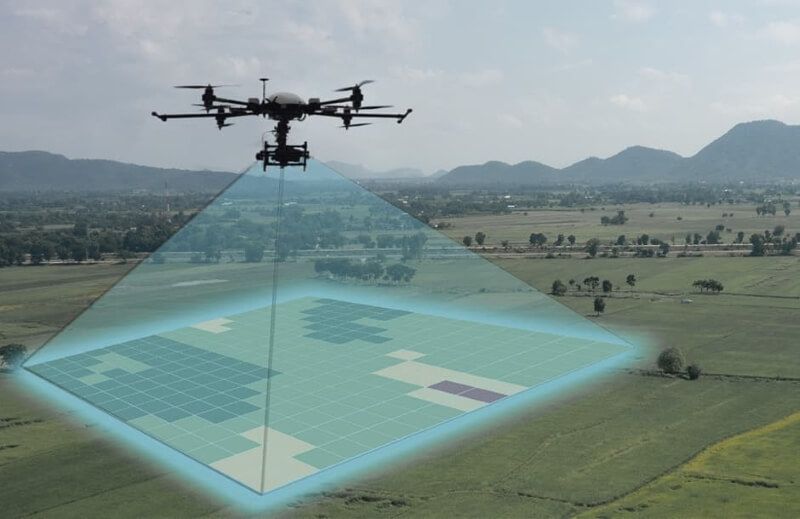
In farming, drone surveys are becoming an important tool for farmers seeking to optimize crop yields. By capturing detailed images and data, drones help in evaluating soil health, checking irrigation systems, and identifying pest infestations. This technology enables targeted farming, where resources are allocated more effectively, resulting in greater productivity and sustainability in land use.
Additionally, drone surveys play a key role in infrastructure and utility inspections. They provide a safer alternative to conventional methods by permitting inspectors to access hard-to-reach areas such as rooftops and transmission lines without risking personal safety. With the capability to gather detailed data quickly, drones help utilities maintain their assets efficiently, minimizing downtime and improving service reliability.
Upcoming Movements in Unmanned Aerial Vehicle Inspection Technology
As innovation continues to evolve, UAV mappings are expected to become even more integrated with AI and machine learning. These developments will allow drones to analyze data in real time, enhancing their ability to identify patterns and anomalies during the surveying procedure. The adoption of AI models will not only accelerate data processing but also enhance the precision of evaluations, making drone surveys an indispensable tool for various sectors.
Another major trend is the development of increasingly complex sensors and imaging technologies. With the launch of high-res imaging devices, LiDAR technologies, and multispectral sensors, UAVs will be able to collect more detailed and extensive data than ever previously. This will extend their applications beyond traditional mapping, enabling accurate monitoring in areas such as farming, environmental assessments, and urban planning. Enhanced sensor technology will boost the capability of UAV inspections to support important decision-making processes.
Finally, laws surrounding UAV operations are developing as their application becomes increasingly common. Future indications show a push towards tighter regulations to ensure safety and confidentiality, as well as the incorporation of UAVs into airspace regulation systems. Topographic Surveys Oxfordshire will probably encourage the growth of commercial drone surveys, providing more defined standards for operators. As compliance improves, we can expect a surge in the utilization of UAV survey technology across various industries, ultimately transforming how we approach land management and infrastructure development.